Build with Agents: Estimate Pulse from Video
I just published a new guide: Build with Agents: Estimate Pulse from Video. It is the first guide in a Build with Agents series about using AI coding agents as serious collaborators without handing them the parts of the work that require judgment.
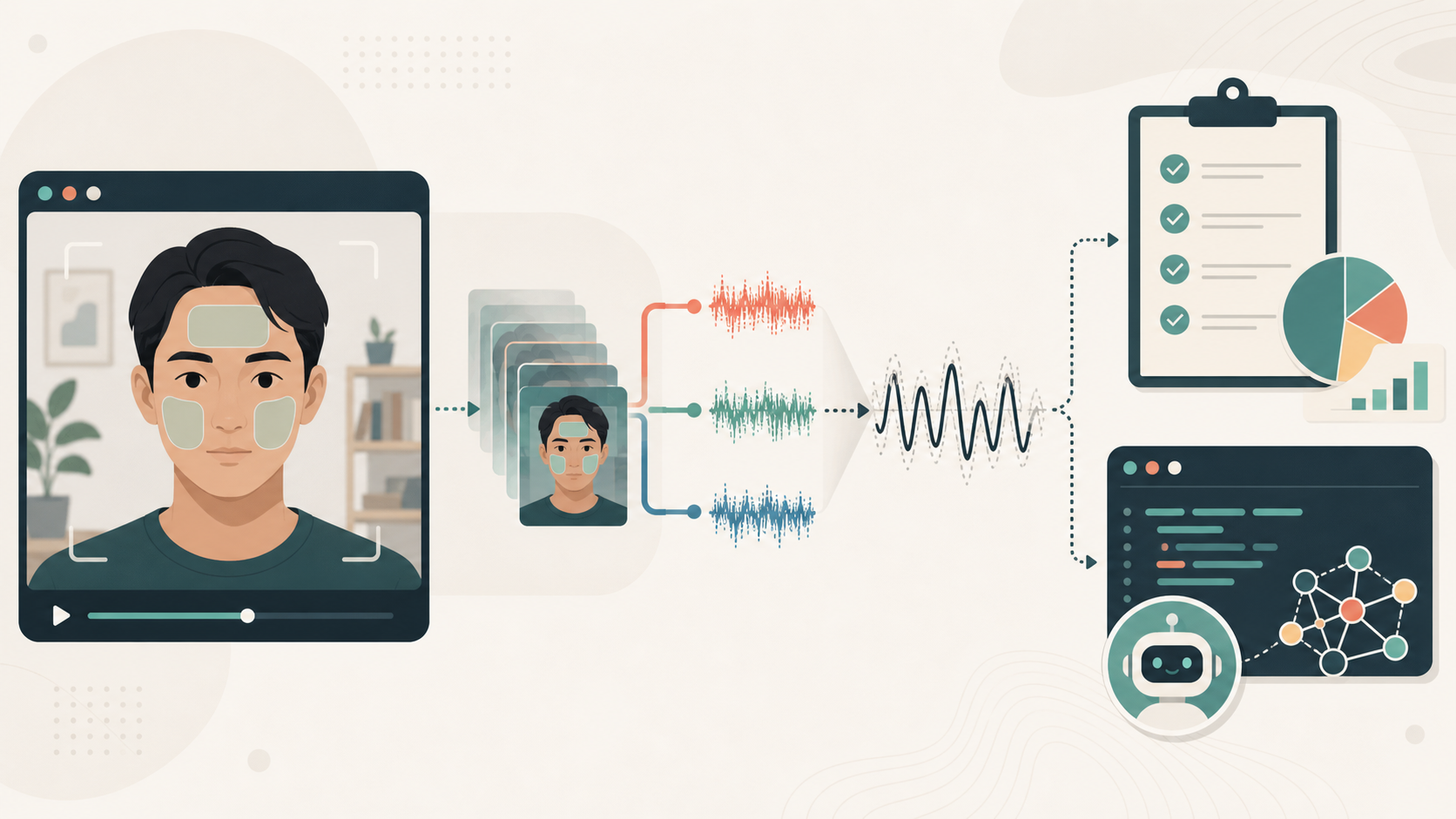
The project is an rPPG lab: estimating pulse from ordinary face video. That makes it small enough to build in a few focused sessions, but realistic enough to fail in useful ways. A camera signal can look convincing while still being wrong because of motion, lighting, compression, skin-tone effects, reference error, or a quiet unit mistake in the pipeline.
That is the point of the guide. The agent can help scaffold code, tests, reports, and experiments, but the human keeps control of the science: the plan, the assumptions, the privacy choices, the validation protocol, and the claims.
The guide uses a two-repo model. The tutorial repo stays clean and stable; the companion lab repo becomes the honest record of what was built, tested, improved, broken, and learned. The modules move from first principles and agent working rules, through data acquisition and a classical baseline, into validation, failure analysis, and responsible reporting.
If you are curious about AI-assisted scientific computing, start with Module 00 and treat the agent like a fast collaborator whose work still has to earn your trust.